
Priority Scottsdale
Water Damage Restoration in Scottsdale, AZ | For Desert Homes and Businesses
Slab leak, failed supply line or monsoon runoff indoors? We find the moisture, remove the water and dry it properly.
- Rated 5.0 on Google (4 reviews)
- Free moisture inspection
- Claim photos and moisture logs for your insurer
Water Problems Look Different in the Desert
People assume water damage is rare where under nine inches of rain falls a year. In practice, Scottsdale homes get wet from the inside far more often. A cracked slab line, a corroded water heater fitting or a clogged attic condensate drain can soak drywall for days unnoticed.
Priority Scottsdale works from an office on North Drinkwater Boulevard near Old Town, handling the whole job from first moisture reading to final paint. We find where the water went, remove it, dry the structure and document each step so adjusters can follow every line.
Desert air makes surfaces feel dry fast, which fools people. A tile floor can read normal on top while the mortar bed or the bottom plate of a wall stays saturated. We trust meters and thermal imaging over touch, and equipment runs until readings match unaffected rooms.
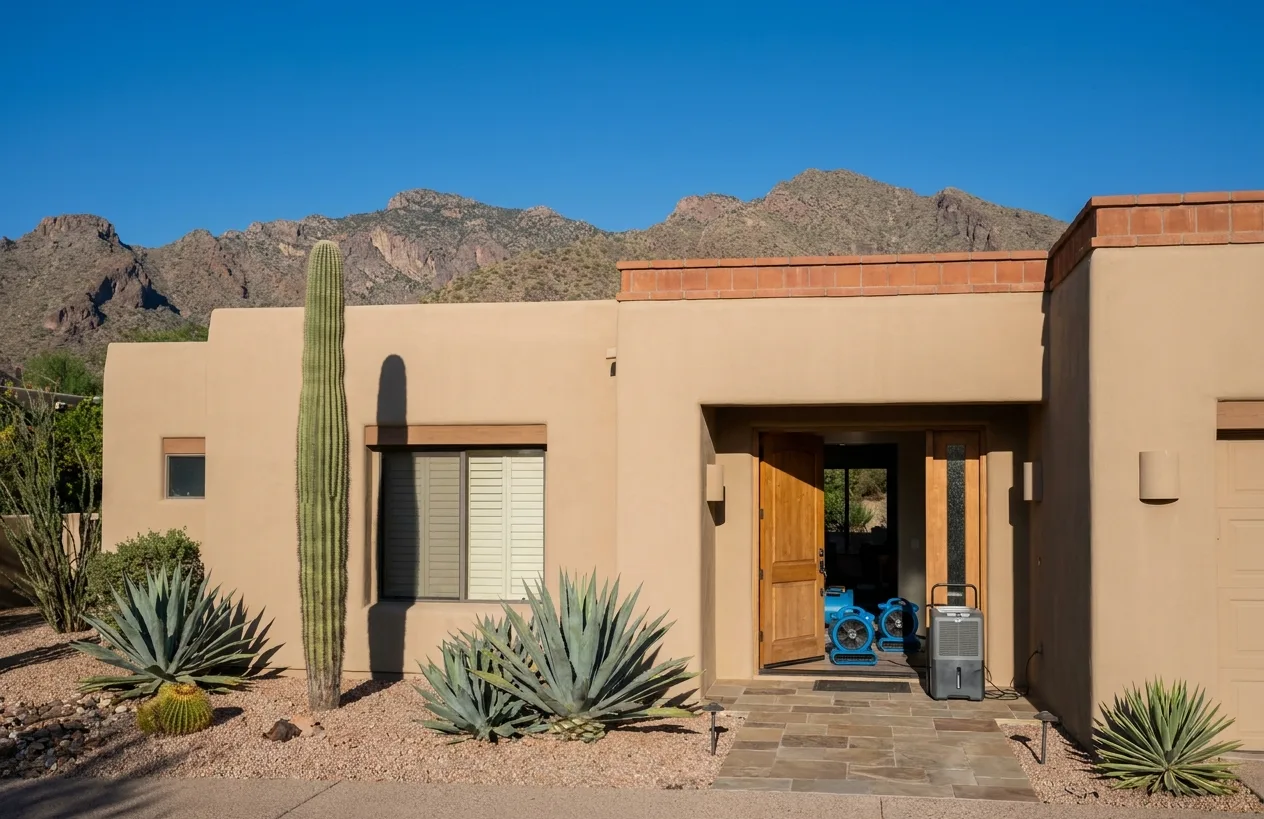
Restoration Services We Provide Across Scottsdale
Every loss starts the same way: we stop the source, map the wet areas and explain the plan before any demolition. After that, the work depends on what got wet, how long it sat and what kind of water it was. These are our most requested services.
Full Water Damage Restoration
This is the end-to-end job: extraction, drying, removal of materials that cannot be saved, cleaning, and putting the room back together. We replace drywall, baseboards, insulation, cabinets and flooring as needed and match local wall textures such as knockdown. One crew manages the whole sequence from start to finish, so you are not juggling separate contractors.
Emergency Water Extraction
Standing water from a burst line spreads under walls and into cabinet bases quickly, so removal comes first. We use truck-mounted and portable extractors, weighted tools for carpet and squeegee wands for tile and stone. Pulling out the bulk of the water early shortens the drying phase and often decides whether carpet and pad can be saved.
Structural Drying and Dehumidification
After extraction our technicians place air movers and refrigerant or desiccant dehumidifiers sized to room volume and materials. Wall cavities may get small vent holes and injection drying instead of full tear-out. We record moisture content every visit, adjust the layout as readings change, and pull equipment only when framing and subfloor reach normal levels.
Mold Inspection and Removal
Mold needs damp materials more than humid air, so a slow leak behind a shower can grow it even in July. Using the IICRC S520 standard as a guide, we build containment, run HEPA air scrubbers under negative pressure, remove contaminated porous materials, clean the framing, then correct the moisture source so growth does not return.
Sewage Backup Cleanup
A backed-up main line or overflowing toilet brings Category 3 water into the home, which calls for a stricter approach. Our crew wears protective gear, removes soaked carpet, pad and lower drywall, and disinfects every hard surface the water reached. We then dry the structure thoroughly so the space is safe to rebuild and use again.
Burst Pipe and Supply Line Cleanup
Braided supply lines to toilets, faucets, refrigerators and washers cause a large share of indoor flooding, and very hard water speeds up wear on their fittings. As soon as your plumber repairs the line, we dry the cabinets, walls and floors it soaked. For leaks under the slab, we plan floor removal around the plumber's repair.
Roof Leak and Ceiling Damage Repair
Tile sheds most rain, but the underlayment beneath it ages in intense sun and eventually lets water through, often during the first big summer storm. Clogged condensate pans in the attic cause similar stains. We dry or replace wet insulation, cut out sagging drywall and rebuild the ceiling with matched texture after the roof repair.
Monsoon Storm and Flood Cleanup
Heavy summer storms can push runoff under patio doors, through the base of stucco walls and into garages. Outside water is treated as contaminated, so we remove affected flooring and lower wall materials, clean with antimicrobial products and dry the slab. We also note exactly where water entered so the right trade can correct it.
Free Moisture Inspection
If you notice a bubbled baseboard, a musty cabinet or a water bill that jumped, we will come out and take readings at no charge. With moisture meters and an infrared camera, we trace how far the water moved and tell you plainly whether professional drying is needed or a plumber alone will handle it.
Insurance Claim Support
We photograph damage before work starts, keep daily moisture logs and write estimates in the line-item format adjusters use. You stay in charge of your claim; we simply give you and your carrier clear records. If an adjuster asks why a wall was opened or a floor removed, we answer with readings rather than opinions.
What Causes Water Damage in Scottsdale Homes
The calls we take follow the seasons and the way local houses are built. Slab foundations, stucco walls, attic air handlers and very hard water each create weak points. These are the six causes we see most often around Scottsdale, roughly in order of frequency.
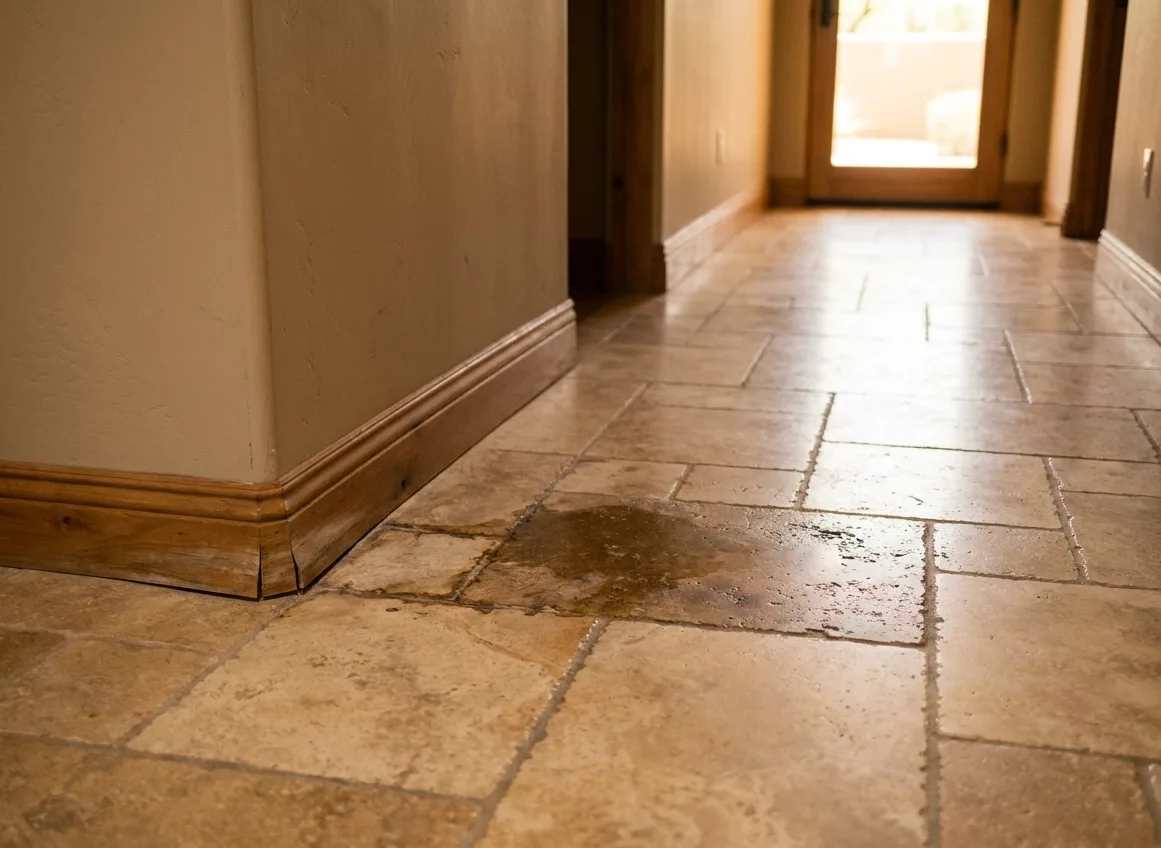
Slab Leaks Under Tile Floors
Many local houses sit on slabs with water lines running through or beneath them. When a line fails, water rises through the slab and spreads under tile or carpet. Warning signs include a warm floor spot, running water sounds with fixtures off, and grout that stays dark.
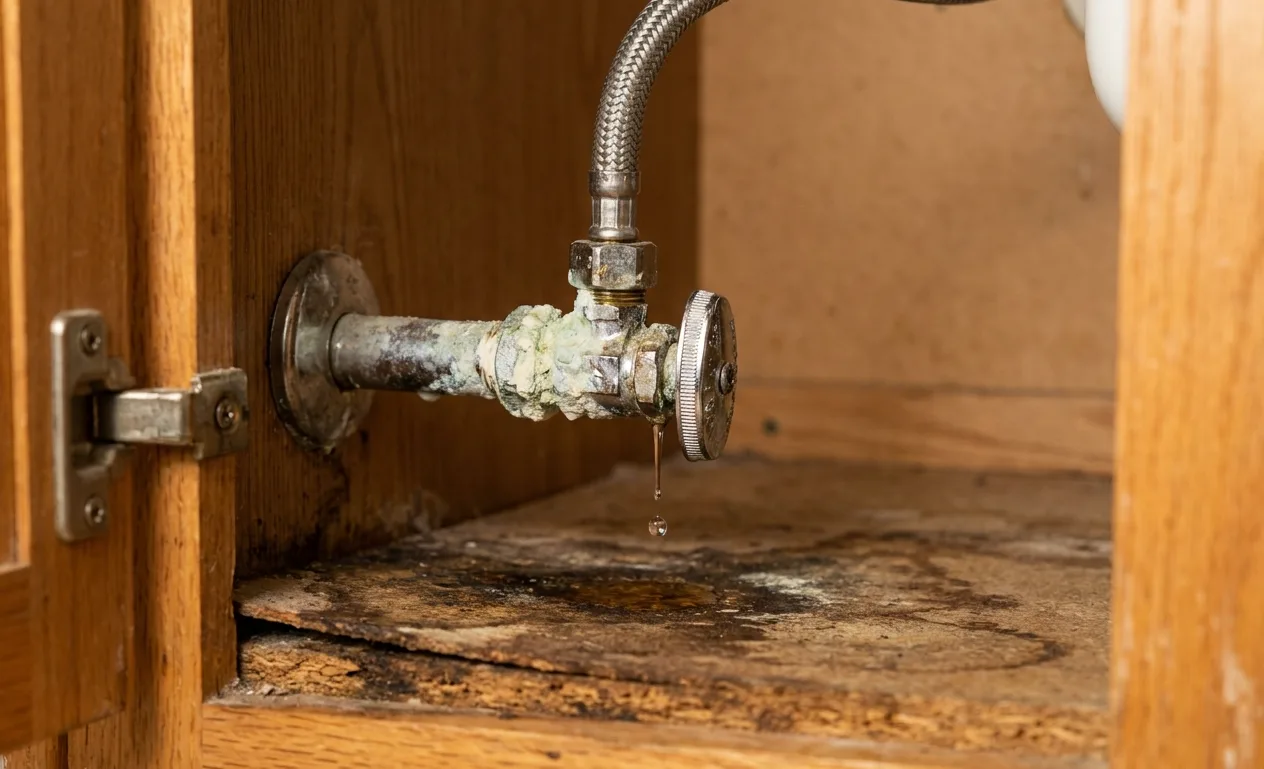
Hard Water and Failing Fittings
The City of Scottsdale reports tap water hardness of roughly 16 to 25 grains per gallon, highest south of Indian School Road. Calcium and magnesium build up inside valves, water heaters and supply connectors, and a weakened fitting can let go without warning while owners are away.
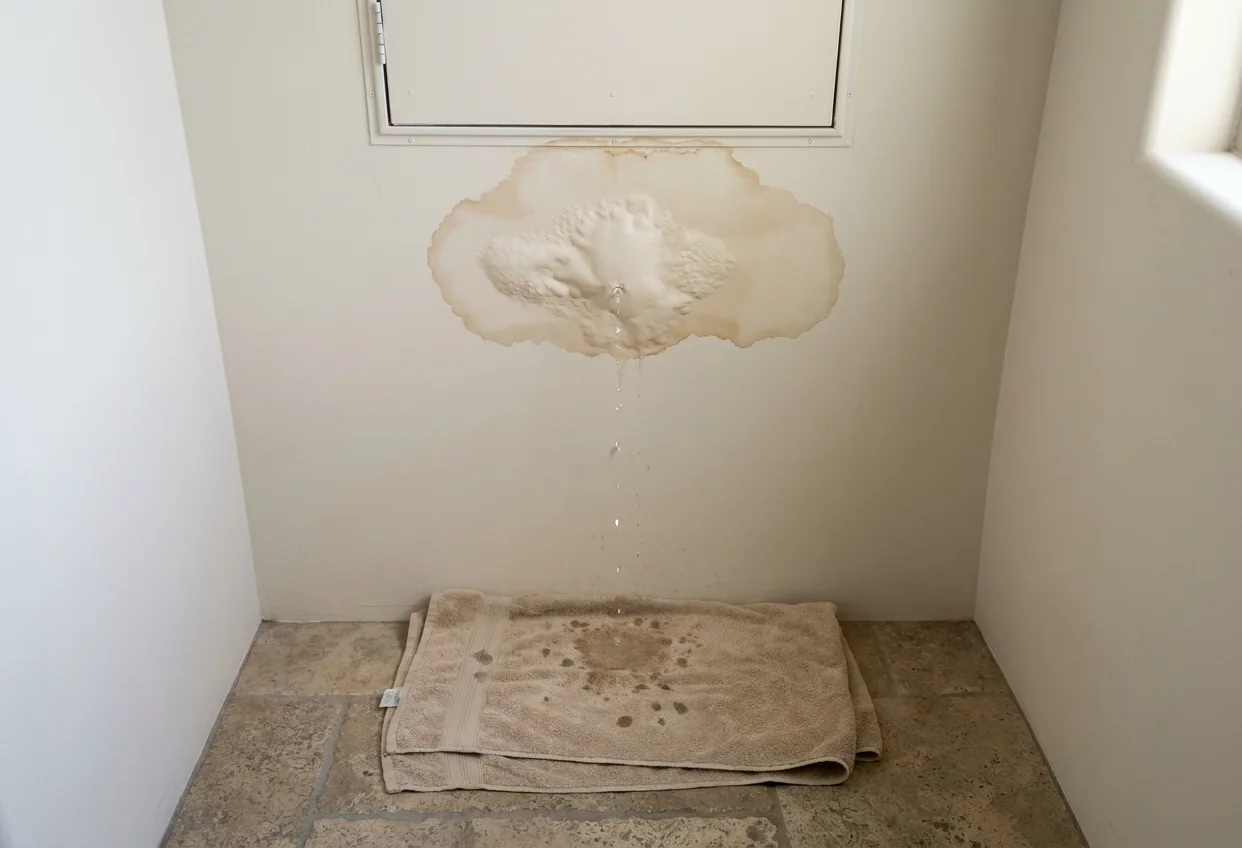
AC Condensate Overflows
Air conditioners run hard for months, sending indoor moisture down a condensate drain line. In many homes the air handler sits in the attic. When algae clogs the line and the float switch fails, the pan overflows and a brown ring spreads across the ceiling.
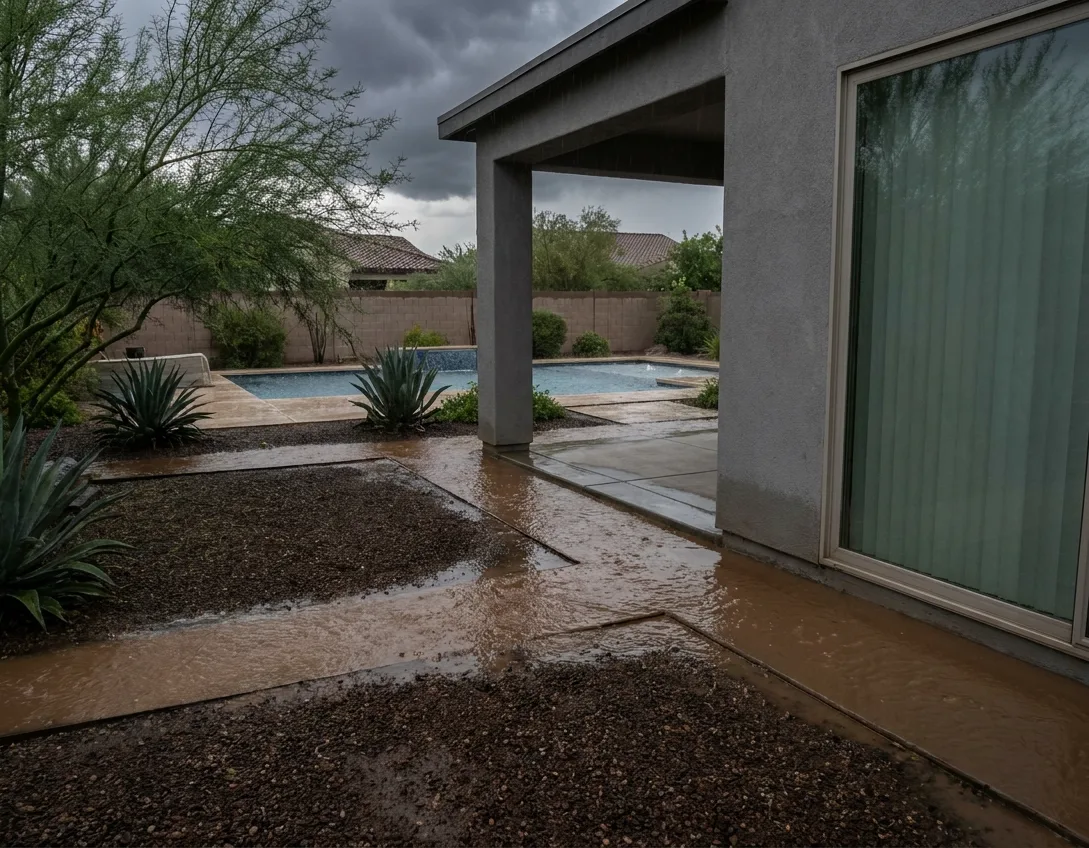
Monsoon Runoff and Wash Flooding
Summer thunderstorms can dump heavy rain on hard desert ground quickly, sending runoff into streets, washes and low yards. The National Weather Service calls flash flooding the biggest monsoon threat. Homes near washes or below a slope can take water through doors, garages and stucco.
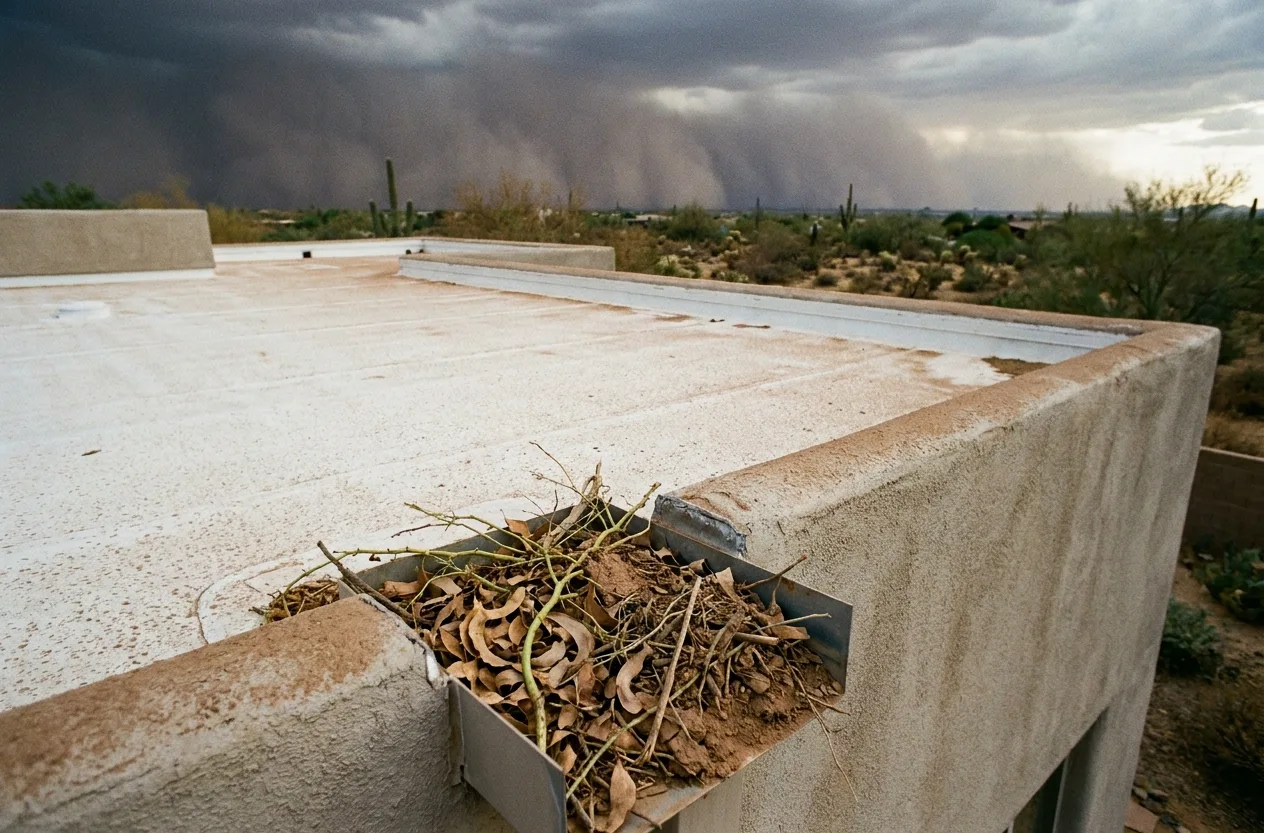
Dust Storms and Clogged Roof Drainage
Dust storms, which the National Weather Service links to thunderstorm outflow winds, often arrive just before the rain. Debris settles in roof valleys, scuppers and gutters, so when the downpour follows, water backs up and finds gaps in underlayment or parapet flashing, exposing years of wear.
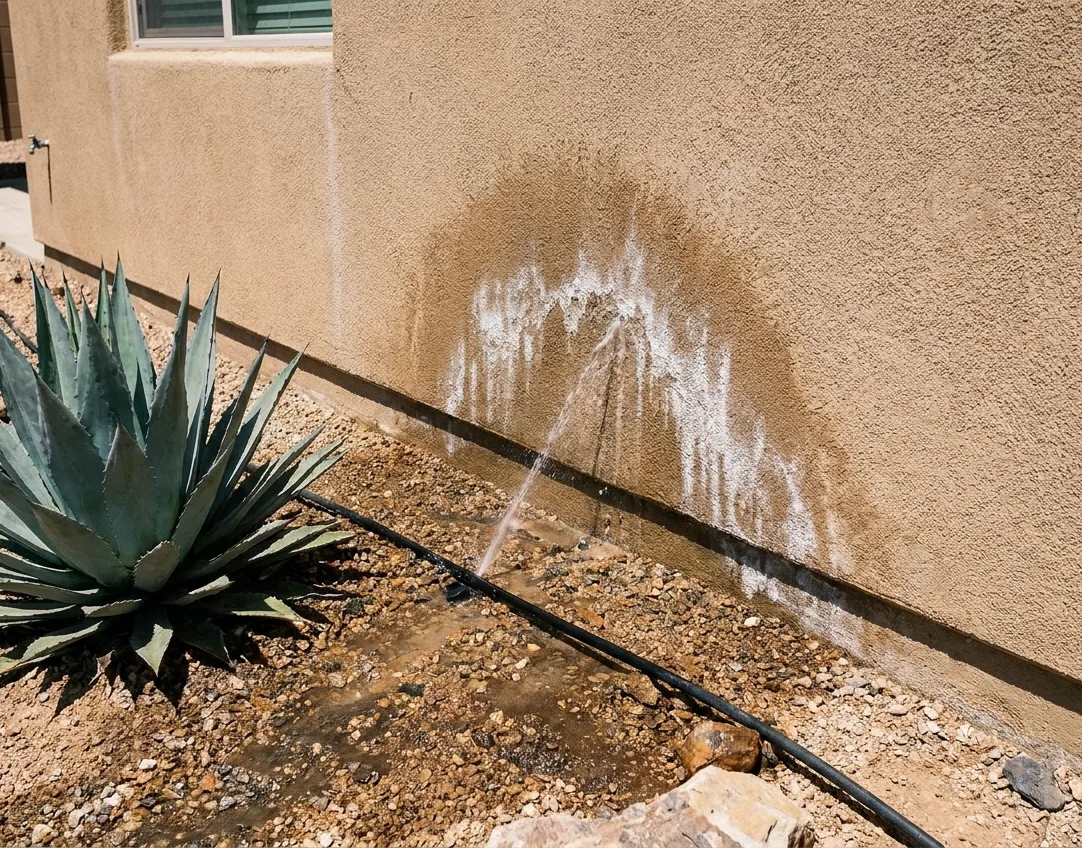
Pool, Irrigation and Water Heater Failures
Pools, drip irrigation and sprinklers keep water close to the foundation, and a broken irrigation line soaking stucco can wick moisture into interior drywall. Inside, water heaters in garages and closets eventually corrode, and a failed tank can empty its full contents across a floor within minutes.
Three Grades of Water, Three Different Cleanups
Water is graded by contamination under IICRC S500, and that grade tells us what we can clean in place, what has to go and what precautions your family needs. We identify the category on the first visit and explain what it means for your floors and walls.
Category 1: Clean Water
A ruptured supply line or ice maker hose releases sanitary water at first. Reached quickly, carpet, pad and drywall can often be dried in place rather than replaced. The catch is heat: clean water sitting for days in a warm house picks up contaminants and moves up.
Category 2: Gray Water
Discharge from a dishwasher, washing machine or toilet overflow without feces carries enough contamination to cause illness. Carpet pad is usually removed, and surfaces are cleaned with antimicrobial products before drying. Condensate from a dirty pan can fall here too, so attic leaks get tested.
Category 3: Black Water
Sewage, outside storm runoff and water left standing long enough to grow bacteria are treated as grossly contaminated. Porous materials it touched, including carpet, pad, insulation and lower drywall, are removed and bagged. Our crew wears protective equipment, sets up containment and disinfects remaining surfaces before drying.
From the First Call to Dry Walls in Five Steps
Find and Stop the Source
First we make sure no more water is coming in by shutting the main valve, closing an angle stop under a sink or turning off the water heater. If a plumber or roofer is needed, we say so, so a second leak does not undo the drying.
Measure and Document
With meters and a thermal camera we map the wet area, including behind cabinets and under flooring. Each room is photographed and its readings recorded. You receive a written scope listing what we plan to dry, what we plan to remove and why, before any demolition.
Extract and Remove
Our technicians extract standing water from carpet, tile and concrete, then take out materials that cannot be restored, such as swollen particleboard, saturated pad or contaminated drywall. Furniture and belongings are moved, set on blocks or packed into a dry room so they stay safe during drying.
Dry and Monitor
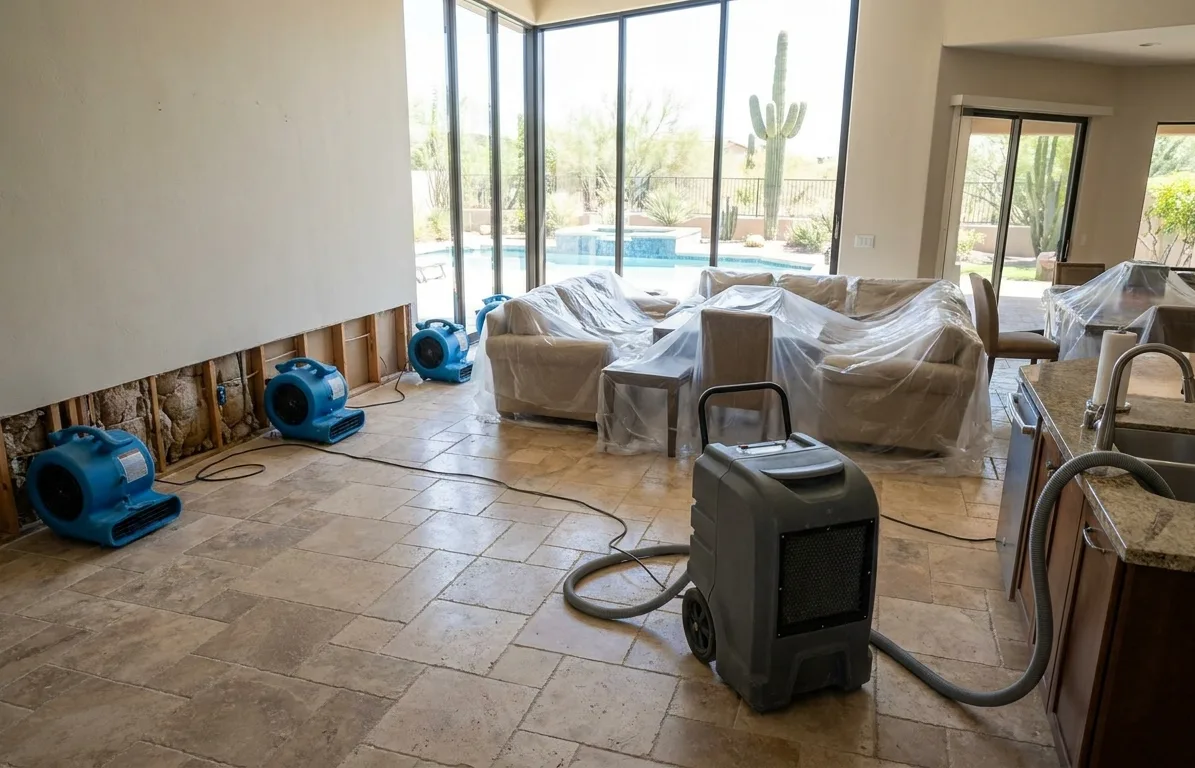
We set air movers and dehumidifiers by room size and material, then check readings every visit. Dry outdoor air helps, but closed wall cavities and floors under tile still need controlled drying. Equipment stays until framing, subfloor and drywall match the readings from dry rooms.
Repair and Rebuild
Once everything is dry we rebuild what was removed: drywall, matched texture, paint, baseboards, cabinets and flooring. We match existing materials as closely as possible, including tile when replacement pieces can still be found. A final walkthrough together confirms the finish work meets your expectations.
Why Scottsdale Owners Choose Priority Scottsdale
We Measure Instead of Guess
Every drying or demolition decision we make is backed by a reading or thermal image you can see. That protects you from unnecessary tear-out and from the opposite problem, a wall that looked fine and quietly grew mold. Ask to see the drying log anytime.
We Know Local Construction
Slab floors, stucco over wire lath, tile roofs and attic air handlers are standard here, and each affects how water travels and how we dry it. Knowing where moisture hides in these houses lets us save more original structure, keeping your rebuild smaller and quicker.
One Team From Start to Finish
The crew that extracts the water also handles drying, cleanup and reconstruction, so you are not left with a dried-out shell and a contractor list. We schedule trades in order, keep the work area contained and tell you in advance which rooms will be off-limits.
Plain Estimates and Paperwork
Our estimates explain each line in language a homeowner can follow and in a format adjusters recognize. Photos, readings and equipment logs go into your file as the job moves along. If insurance covers only part of the work, we show you which items fall outside beforehand.
Scottsdale Climate, Washes and Homes
Scottsdale covers about 184 square miles of Maricopa County and counted 241,361 residents in the 2020 census. The climate is arid, with average yearly precipitation near 8.7 inches, and the record high reached 122 degrees in June 1990. That heat strains air conditioners and water heaters.
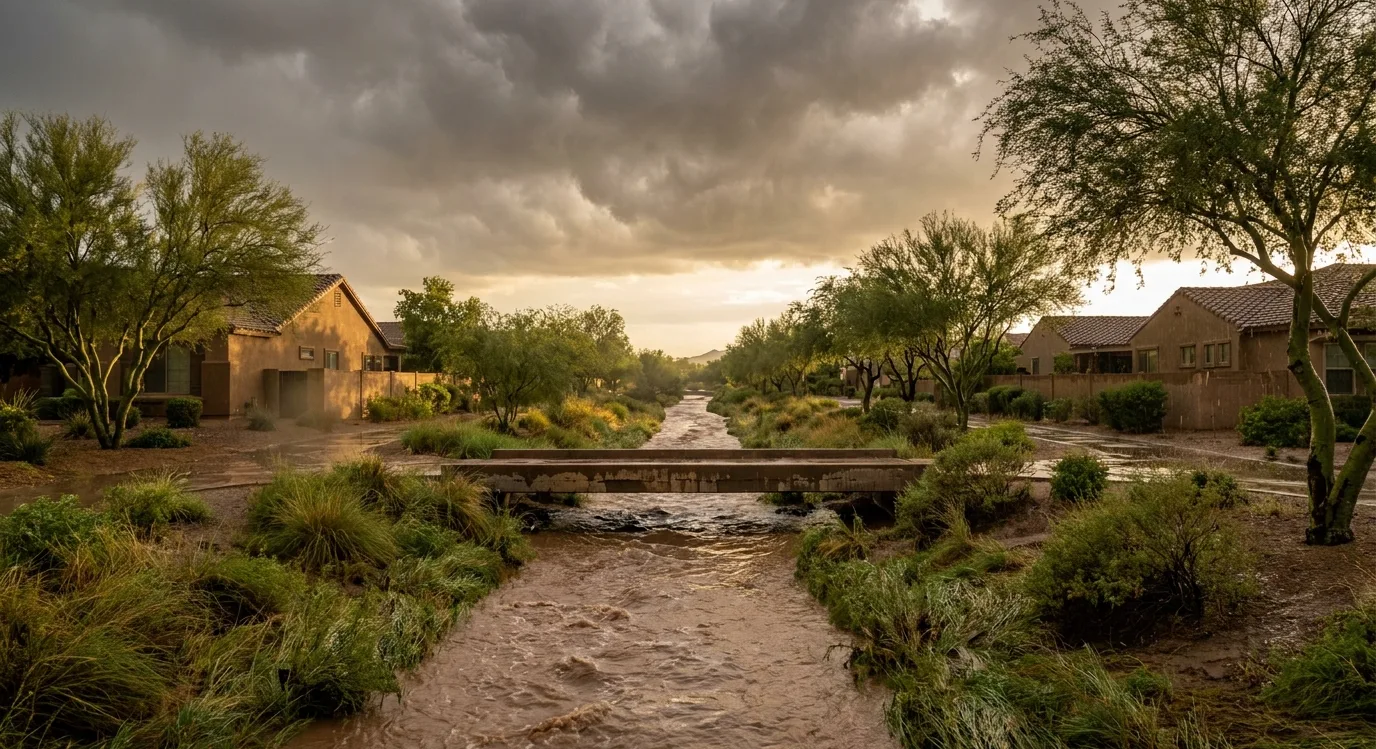
The National Weather Service treats June 15 through September 30 as Arizona's monsoon season. Storms can bring lightning, outflow winds and dust before the rain, and flash flooding is the biggest threat. Maricopa County notes that one in four flood insurance claims comes from outside a floodplain.
Scottsdale's best-known flood defense is the Indian Bend Wash Greenbelt, a chain of parks, lakes, paths and golf courses running about 11 miles through the city. Much of it was built in phases after a June 1972 storm dropped 3.85 inches of rain in roughly eighty minutes.
What Water Damage Restoration Costs in Scottsdale
Cost depends on how much area got wet, what category of water it was, which materials are affected and how much rebuilding follows. These ranges reflect typical residential jobs in and around Scottsdale homes. The inspection is free, and a written estimate always comes before work.
Ranges are guides, not quotes. Interior ceiling repair after a roof leak usually runs $1,000–$5,000+. Many sudden losses are covered at least partly by homeowners insurance, subject to your deductible.
| Job | Price guide |
|---|---|
| Moisture inspection | Free |
| Emergency water extraction | $500 minimum; $1,000–$4,500 for most homes |
| Structural drying | $1,500–$6,000 for most homes |
| Complete water damage restoration | $2,500–$10,000 in a typical house; $15,000–$50,000+ after a major loss |
| Mold removal | $1,500 minimum; $2,500–$7,500 typical; $10,000–$30,000+ when widespread |
| Sewage backup cleanup | $3,000–$12,000+ for most homes |
| Burst pipe cleanup (plumber's repair separate) | $1,500–$7,500 for most homes |
| Storm and flood cleanup | $3,000–$15,000 typical; $25,000+ when severe |
Communities We Serve Around Scottsdale
Our office near Old Town keeps us close to every part of Scottsdale and the communities around it, each with its own water risks.
Paradise Valley
Acre-plus lots near Camelback and Mummy Mountain mean long plumbing runs, big pools and irrigation hugging foundations.
Arcadia
Ranch homes on former citrus land below Camelback Mountain, partly inside Scottsdale east of 64th Street.
North Scottsdale
Custom homes near the McDowell Sonoran Preserve often have several attic air handlers and debris-catching tile valleys.
Tempe
Our southern neighbor by Tempe Town Lake, where shared plumbing walls let one apartment leak reach several units.
Fountain Hills
Hillside homes east of the McDowell Mountains sit about 500 feet above Phoenix, so runoff races down sloped lots.
Salt River Pima-Maricopa Indian Community
Bordering Scottsdale, Mesa, Tempe and Fountain Hills along Loop 101; we serve homes and businesses there.
Carefree
A 1950s master-planned town beneath Black Mountain, where older custom homes may keep aging original plumbing.
Cave Creek
Desert properties on Scottsdale's northern edge often sit beside natural washes that run hard in summer storms.
Rio Verde
An age-restricted community near the Verde River where seasonal residents sometimes return to slow leaks.
Mesa
North Mesa neighborhoods across the Salt River hold large tracts of slab homes prone to water heater failures.
Scottsdale Water Damage Questions
How much does water damage restoration cost in Scottsdale?
A typical Scottsdale home restoration lands between $2,500 and $10,000, while a severe loss can climb to $15,000–$50,000+. Water removal on its own is priced from $500; most Scottsdale extraction visits come to between $1,000 and $4,500. Price depends on how far water spread, its category and the rebuilding needed. Inspection is free, and you get a written estimate first.
Will my homeowners insurance cover the damage?
Policies usually cover sudden, accidental water such as a burst supply line, minus your deductible. Outside flooding is different; Maricopa County notes homeowners policies typically exclude flood, which needs separate coverage with a 30-day waiting period. Check your policy, and we will supply the photos and readings your adjuster requests.
Why does drying take several days if the air here is so dry?
Low humidity helps exposed surfaces, but water trapped in wall cavities, under tile and inside framing escapes slowly whatever the weather. Indoor air also picks up moisture from wet materials. Controlled dehumidification and directed airflow pull it out evenly. Many jobs need three to five days, confirmed with meter readings.
What should I do first when I find a leak?
Shut the water at the fixture valve or the main shutoff, often in a box near the street. Switch off breakers for wet outlets or appliances if you can do so safely. Move rugs, electronics and papers to a dry room, take photos, and never run a household vacuum on standing water.
Can mold really grow in a desert climate?
Yes. Mold responds to moisture in materials, not outdoor humidity. A slow drip behind a shower valve, a sweating pipe or a wet cabinet base gives it what it needs, and warm rooms speed growth. Colonies can appear within days of a leak, so fast, verified drying is the best prevention.
Do you handle flooding from monsoon storms?
Yes. Storm water entering from outside counts as Category 3 because it carries soil, debris and bacteria. We remove affected porous materials, clean and disinfect, then dry the slab and walls. We also record how water got in, whether a threshold, garage or stucco base, so you can fix the entry point.
Priority Scottsdale · 4250 N Drinkwater Blvd Ste 7, Scottsdale, AZ 85251
Get Your Scottsdale Property Dry Again
Call Priority Scottsdale for a free moisture inspection and a clear plan before any work starts.